



إعادة تعريف الجودة في المؤسسات الصناعية لعام 2026: نحو نموذج تكاملي قائم على الأداء البشري والعملياتي



كتب - عثمان الشويخ
في إطار متابعتنا المستمرة لكل ما هو جديد ومبتكر في عالم الإدارة والجودة، واستكمالاً لما طرحناه سابقاً حول النظريات الإدارية الحديثة، نستعرض اليوم رؤية تطبيقية متطورة للمهندس هيثم محمد عبد الغني المسلمي.
يقدم فيها خارطة طريق لمستقبل الجودة في عام 2026، واضعاً "الإنسان" و"الاستقرار النفسي" كمحركين أساسيين للإنتاجية الصناعية.
إعداد وفكرة
م. هيثم محمد عبد الغني المسلمى
أخصائي رقابة جودة – شركة مطاحن شمال القاهرة
باحث في علوم الجودة والتحسين المستمر
.........................
الملخص
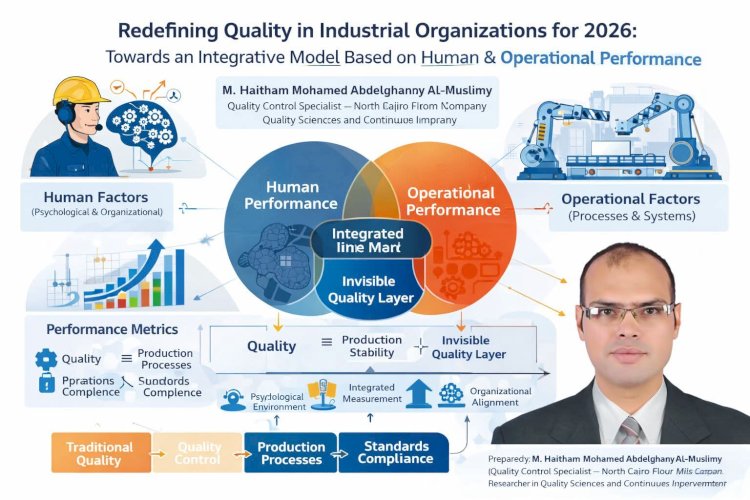
تشهد المؤسسات الصناعية في عام 2026 تحولًا جوهريًا في مفهوم الجودة، حيث لم تعد تقتصر على ضبط العمليات أو مطابقة المواصفات القياسية، بل أصبحت منظومة متكاملة ترتكز على التفاعل بين الأداء التشغيلي والعوامل البشرية والتنظيمية.
يهدف هذا المقال إلى تقديم إطار علمي حديث يعيد تعريف الجودة من منظور تكاملي، مع التركيز على تأثير البيئة النفسية والتنظيمية للعاملين على مخرجات الإنتاج.
كما يناقش المقال مفهوم “طبقة الجودة الخفية” ودورها في تحسين الأداء المؤسسي واستدامة النتائج، ويقترح نموذجًا عمليًا لقياس جودة الأداء يتجاوز المؤشرات التقليدية.
المقدمة
على مدار العقود الماضية، ارتبط مفهوم الجودة في المؤسسات الصناعية بتطبيق نظم رقابية تهدف إلى تقليل العيوب وتحسين كفاءة العمليات الإنتاجية.
وقد أسهمت هذه النظم في تحقيق مستويات عالية من الانضباط التشغيلي، إلا أنها ظلت في كثير من الأحيان تركز على النتائج الظاهرة دون التعمق في العوامل غير المرئية المؤثرة على الأداء.
ومع تطور بيئات العمل وتعقيد الأنظمة الإنتاجية، أصبح من الضروري إعادة النظر في مفهوم الجودة ليشمل الأبعاد الإنسانية والتنظيمية، باعتبارها عناصر حاكمة في استقرار العمليات وتحقيق الأداء المستدام.
الإطار المفاهيمي للجودة الحديثة
1. التحول من الجودة التقليدية إلى الجودة التكاملية
لم تعد الجودة مفهومًا منفصلًا عن باقي عناصر المنظومة، بل أصبحت ناتجًا
لتكامل ثلاثة محاور رئيسية:
كفاءة العمليات التشغيلية
استقرار الأنظمة والإجراءات
الحالة التنظيمية والإنسانية للعاملين
ويعكس هذا التحول انتقال المؤسسات من نماذج رقابية تقليدية إلى نماذج أكثر شمولًا تعتمد على فهم العلاقات المتداخلة داخل بيئة العمل.
2. طبقة الجودة الخفية
يشير هذا المفهوم إلى مجموعة العوامل غير المرئية التي تؤثر بشكل مباشر على جودة الأداء، وتشمل:
مستوى الرضا الوظيفي
الضغوط النفسية داخل بيئة العمل
نمط القيادة والتواصل الإداري
درجة الانتماء المؤسسي
ورغم صعوبة قياس هذه العوامل بشكل مباشر، إلا أن تأثيرها يظهر بوضوح في:
معدلات الأخطاء
استقرار الإنتاج
جودة المنتج النهائي
3. البعد النفسي للأداء الصناعي
تؤكد الدراسات الحديثة في علم النفس الصناعي أن الأداء البشري لا يعتمد فقط على المهارات الفنية، بل يتأثر بشكل كبير بالحالة الذهنية والانفعالية للعاملين.
وعليه، فإن تجاهل هذا البعد يؤدي إلى:
تذبذب الأداء
زيادة معدلات الهدر
ضعف القدرة على الاستجابة للمتغيرات
منهجية تحسين الأداء المؤسسي
1. توسيع نطاق القياس
ينبغي أن تشمل منظومات القياس الحديثة:
مؤشرات الأداء الإنتاجي (الإنتاجية، الجودة، الهدر)
مؤشرات الاستقرار التشغيلي (الأعطال، التوقفات)
مؤشرات بيئة العمل (الرضا، الضغوط، التفاعل الوظيفي)
2. التكامل بين الوظائف التشغيلية
يتطلب تحسين الأداء تحقيق ترابط فعلي بين:
الإنتاج
الجودة
الصيانة
الإمداد والتموين
وذلك من خلال نظم متابعة موحدة تسمح برؤية شاملة ودقيقة لحالة التشغيل.
3. تطوير دور القيادة
لم يعد دور القيادة مقتصرًا على المتابعة واتخاذ القرار، بل أصبح يشمل:
فهم السلوك التنظيمي
إدارة بيئة العمل النفسية
تعزيز ثقافة الجودة المستدامة
نموذج مقترح لقياس جودة الأداء
يمكن التعبير عن جودة الأداء المؤسسي من خلال المعادلة التالية:
جودة الأداء = كفاءة العمليات × استقرار النظام × التوازن التنظيمي للعاملين
ويعكس هذا النموذج العلاقة التكاملية بين العناصر الفنية والبشرية، ويؤكد أن تحقيق الجودة المستدامة يتطلب توازنًا دقيقًا بين هذه الأبعاد.
الخلاصة
توضح النتائج التحليلية أن المؤسسات التي تعتمد على مؤشرات تقليدية فقط قد تحقق تحسنًا مؤقتًا في الأداء، لكنها تظل عرضة للتقلبات التشغيلية.
في المقابل، فإن تبني منظور تكاملي للجودة يساهم في:
تعزيز الاستقرار الإنتاجي
تقليل الانحرافات غير المتوقعة
تحسين بيئة العمل
تحقيق استدامة الأداء
وفي ضوء التحولات الصناعية الحديثة، أصبح من الضروري إعادة صياغة مفهوم الجودة ليعكس الطبيعة المركبة للأنظمة الإنتاجية. فالجودة لم تعد مجرد نتيجة لعمليات منضبطة، بل هي انعكاس مباشر لتكامل الأداء الفني مع البيئة التنظيمية والإنسانية.
وعليه، فإن المؤسسات التي تسعى إلى تحقيق التميز في عام 2026 وما بعده، يجب أن تتبنى نماذج شاملة للجودة تركز على الإنسان باعتباره عنصرًا محوريًا في منظومة الإنتاج.
خاتمة (عثمان الشويخ):
إن ما يقدمه المهندس هيثم المسلمي في هذا الطرح هو نموذج عملي يخرج بالجودة من إطار "الأوراق والمستندات" إلى إطار "الواقع البشري"، وهو ما نحتاجه فعلياً لتطوير مؤسساتنا الوطنية لتواكب التحديات العالمية القادمة.
للإطلاع على المقال باللغة الإنجليزية يرجي مراجعة النسخة المرفقة أدناه
**Redefining Quality in Industrial Organizations for 2026:
Toward an Integrated Model Based on Human and Operational Performance**
Prepared by:
Eng. Haitham Mohamed Abdel Ghani Al-Musallami
Quality Control Specialist – North Cairo Mills Company
Researcher in Quality Science and Continuous Improvement
Abstract
Industrial organizations in 2026 are undergoing a fundamental transformation in the concept of quality. Quality is no longer limited to process control or compliance with standard specifications; rather, it has evolved into an integrated system based on the interaction between operational performance and human and organizational factors.
This paper aims to present a modern scientific framework that redefines quality from an integrative perspective, with a focus on the impact of the psychological and organizational environment of employees on production outputs. It also discusses the concept of the “Invisible Quality Layer” and its role in improving organizational performance and sustaining results. Furthermore, it proposes a practical model for measuring performance quality that goes beyond traditional indicators.
Introduction
Over the past decades, the concept of quality in industrial organizations has been associated with control systems aimed at reducing defects and improving production efficiency. While these systems have contributed to achieving high levels of operational discipline, they have often focused on visible outcomes without addressing the underlying invisible factors influencing performance.
With the evolution of work environments and the increasing complexity of production systems, it has become essential to reconsider the concept of quality to include human and organizational dimensions, as they are critical determinants of operational stability and sustainable performance.
Conceptual Framework of Modern Quality
1. From Traditional Quality to Integrated Quality
Quality is no longer a standalone concept but rather the result of the integration of three main pillars:
Operational process efficiency
System and procedural stability
Organizational and human conditions of employees
This shift reflects a transition from traditional control models to more comprehensive models based on understanding the interrelated dynamics within the work environment.
2. Invisible Quality Layer
This concept refers to a set of non-visible factors that directly influence performance quality, including:
Job satisfaction levels
Psychological pressures within the work environment
Leadership and communication styles
Degree of organizational belonging
Although these factors are difficult to measure directly, their impact is clearly reflected in:
Error rates
Production stability
Final product quality
3. Psychological Dimension of Industrial Performance
Modern industrial psychology studies confirm that human performance does not depend solely on technical skills but is significantly influenced by employees’ mental and emotional states.
Ignoring this dimension leads to:
Performance fluctuations
Increased waste rates
Reduced adaptability to changes
Performance Improvement Approach
1. Expanding Measurement Scope
Modern measurement systems should include:
Production performance indicators (productivity, quality, waste)
Operational stability indicators (failures, downtime)
Work environment indicators (satisfaction, stress, engagement)
2. Integration of Operational Functions
Improving performance requires real integration among:
Production
Quality
Maintenance
Supply and logistics
This can be achieved through unified monitoring systems that provide a comprehensive and accurate view of operational status.
3. Leadership Development
Leadership is no longer limited to supervision and decision-making; it must also include:
Understanding organizational behavior
Managing the psychological work environment
Promoting a culture of sustainable quality
Proposed Model for Measuring Performance Quality
Performance quality can be expressed as:
Performance Quality = Process Efficiency × System Stability × Organizational Balance of Employees
This model reflects the integrative relationship between technical and human elements and emphasizes that achieving sustainable quality requires a precise balance between these dimensions.
Discussion
Analytical findings indicate that organizations relying solely on traditional indicators may achieve temporary performance improvements but remain vulnerable to operational fluctuations.
In contrast, adopting an integrated quality perspective contributes to:
Enhancing production stability
Reducing unexpected deviations
Improving the work environment
Achieving sustainable performance
Conclusion
In light of modern industrial transformations, it has become necessary to redefine the concept of quality to reflect the complex nature of production systems. Quality is no longer merely the result of controlled processes but a direct reflection of the integration between technical performance and the organizational and human environment.
Accordingly, organizations seeking excellence in 2026 and beyond must adopt comprehensive quality models that place humans at the core of the production system.
Keywords
Industrial Quality
Organizational Performance
Invisible Quality Layer
Industrial Psychology
Continuous Improvement
Quality Sustainability